History
The story of the dairy cow
Long before a government table tried to say exactly what a dairy cow was, people sat beside animals and took milk by hand. Later came machines, a royal creamery with fountains under the marble, a marketing board, and a tracing system that counts every holding with cattle.
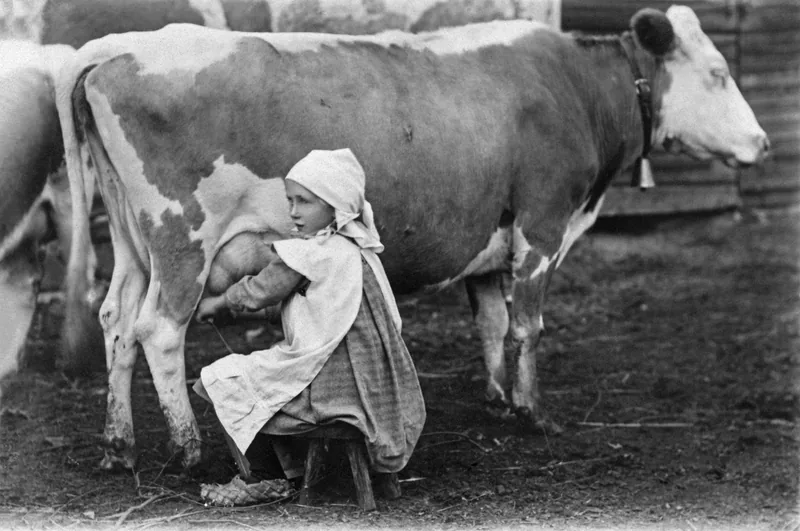
A photograph in the Finnish Heritage Agency’s collection, taken on 21 October 1921, shows six-year-old Paula, daughter of the agronomist Harlin, milking a cow. It is a historical Finnish picture, not a British parlour, and it is here because it still looks like the work: a stool, a pail, a cow, a child learning a farm skill that official statistics would later try to count.
A Gloucestershire milkmaid, and a new word
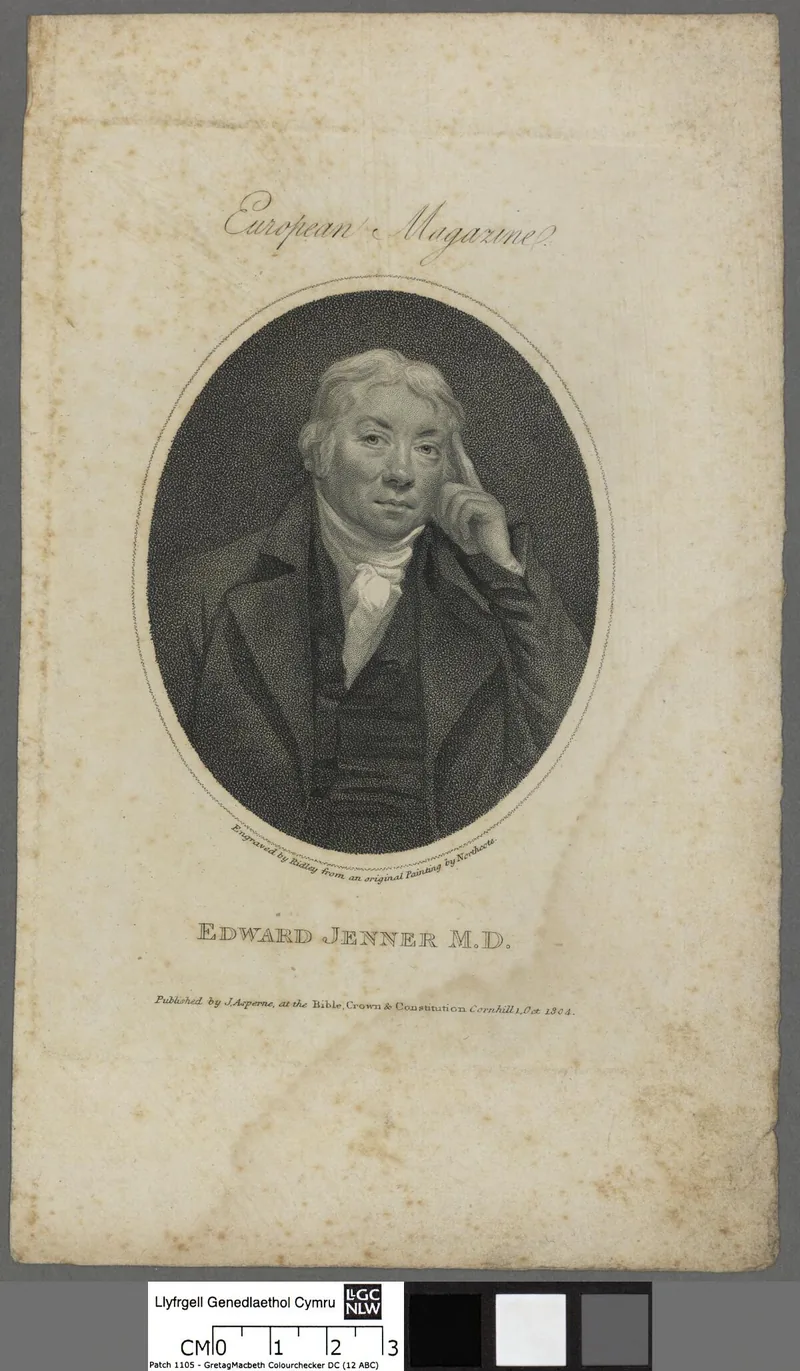
In 1796, in an agricultural community, Jenner took cowpox material from Sarah Nelmes and inoculated James Phipps. The Science Museum Group records the folklore he was testing — that milkmaids seemed unmarked by smallpox — and the name he gave the method: vaccination, from vacca. [source][source] In 1853, thirty years after his death, smallpox vaccination was made compulsory in England and Wales. [source] The dairy cow had already changed more than the farm.
A royal creamery, 1848
The historic Royal Dairy, a royal.uk article explains, stands in Windsor Home Park, just to the east of Frogmore House. It was built under the personal direction of Prince Albert in 1848, in the Renaissance style, replacing outdated buildings from George III’s reign. The creamery is 40 feet long and 20 feet wide, preserved as first built, with richly coloured tiles on the walls and floor. When it was new, the official account says, it was “the height of nineteenth century farming technology and enabled fresh cream to be delivered to the Palaces daily.” [source]
Emma Clarke, Custodian of the Royal Creamery, describes the hidden cleverness: milk went into settling pans, kept cool by water running from three fountains — a mermaid, a merman and a lady holding a jug — constantly under the marble trestle tops, so that cream could be skimmed and carried to the palaces. [source] Ornament, in other words, was also a cooling system.
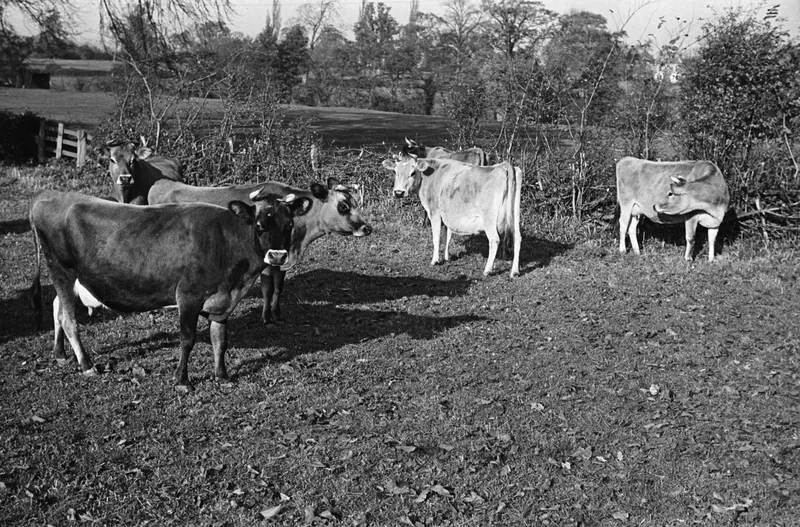
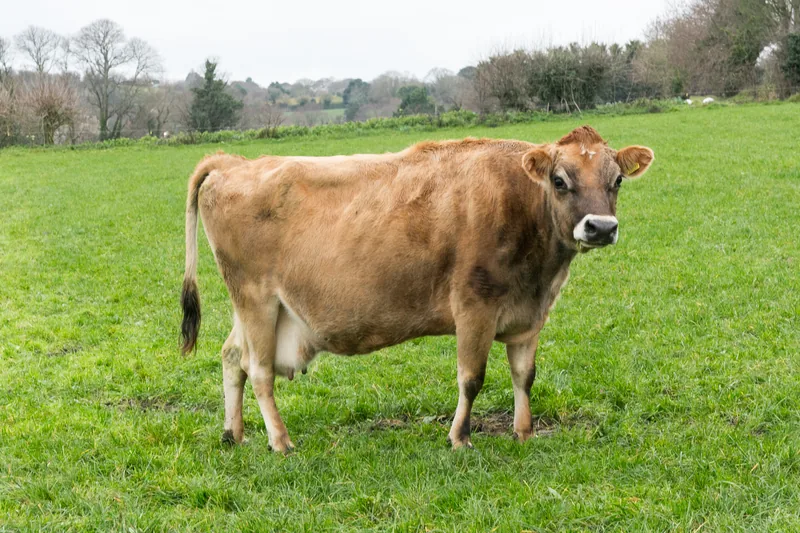
Jersey cattle, the breed later associated with the Windsor herd, were already a British fashion well beyond the castle. Geoff Charles photographed Mrs Walker’s herd at Plas Dixon, Oswestry, on 1 November 1948. A later photograph, on the island itself, shows a Jersey cow in Grouville in 2018.
Machines for milk and cream
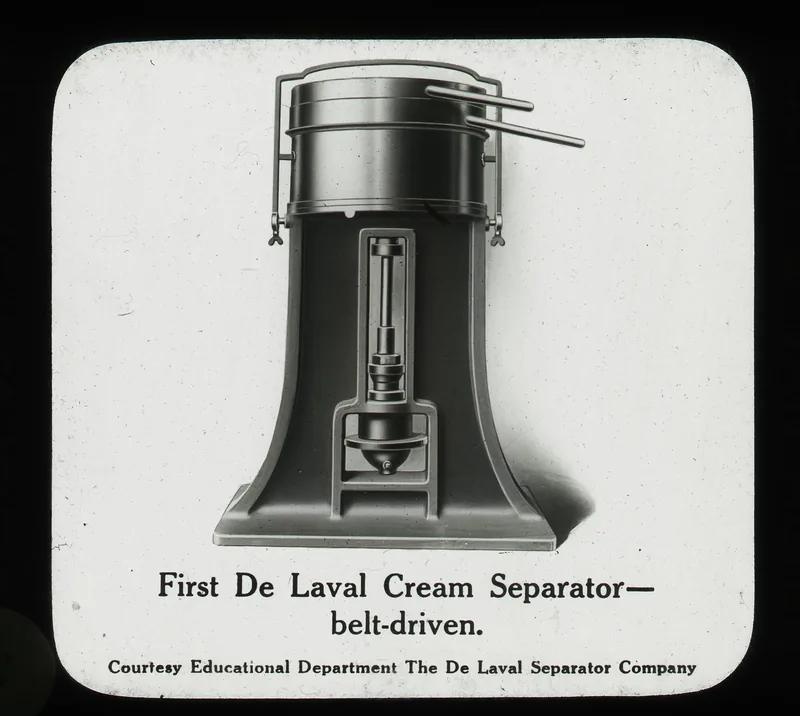
The Science Museum Group describes Karl Gustaf Patrik de Laval, a Swedish engineer, as having “developed steam turbines and dairying equipment.” [source] A 1938 Alfa-Laval cream separator in the collection is explained in a sentence that jumps, delightfully, from the dairy to the laboratory: cream separators spin milk very rapidly, so the heavier part is thrown outward with greater force than the less dense cream. “A similar kind of centrifuge is used in laboratories to separate the heavier red cells from the lighter plasma in blood.” [source]
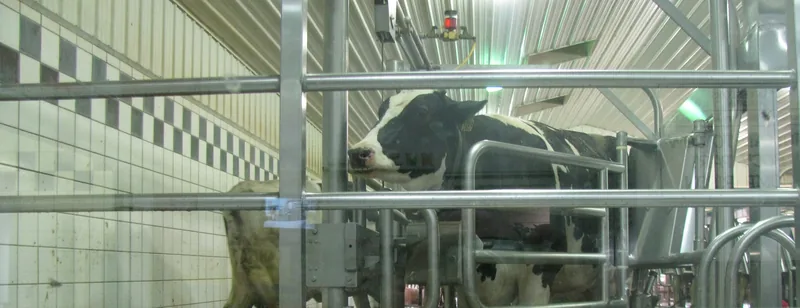
Milking itself was being mechanised by the end of the nineteenth century. The museum holds an early Murchland milking unit, dated about 1890, with two sets of four teat cups and three-way air taps. [source] A later parlour photograph on this site, from Wisconsin in 2012, shows how far the stall and the pipeline travelled — a different country, a different century, the same basic idea of taking milk from the cow without a pail on the knee.
A board, a slogan, and a count
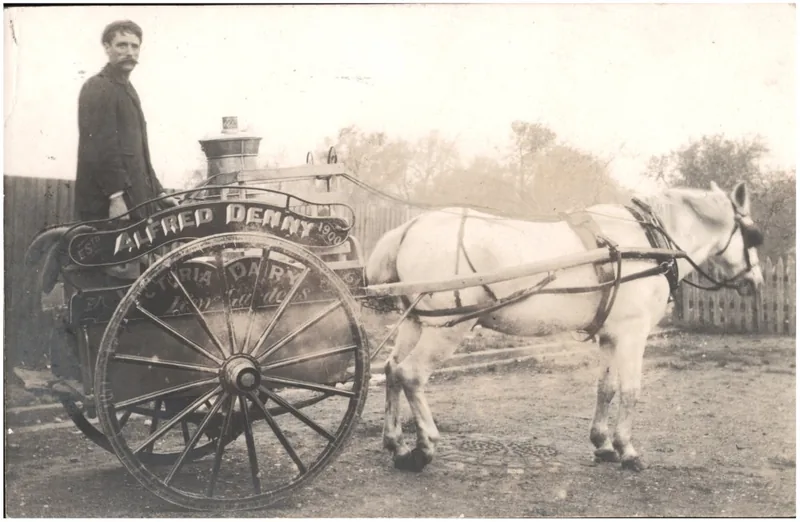
A historic photograph of a milkman and horse-drawn cart, lettered for Alfred Denny of the Victoria Dairy at Kew Gardens, stands in here as a reminder of the doorstep pint. In 1933, a catalogue of Milk Marketing Board films held at the Museum of English Rural Life records, simply, “1933 Milk Marketing Board set up,” and elsewhere “MMB set up in 1933 by farmers to represent their interests.” [source] The Agricultural Marketing Act 1933, still on legislation.gov.uk, belongs to the same year. [source] This site does not use the Act as a substitute for the Board’s own founding papers; the MERL catalogue is the warrant for the Board’s date.
The same catalogue lists a Milk Marketing Board advertising film of 1965 with supermarket shots and the line “Drinka Pinta Milka day,” and, later, a 1980s advertisement, “Gotta Lotta Bottle.” [source] Official film descriptions are not advertising copy written yesterday. They are how the Board’s own campaigns were filed.
By the 2020s the official count had become something more exacting. England’s cattle figures are taken from the Cattle Tracing System and include all holdings with cattle, so they are “not subject to survey error.” [source] In Agriculture in the United Kingdom 2025, a dairy cow, for those figures, is a female dairy cow over two years old with offspring. [source] The desk and the figures page keep those official sentences in their own places.
Even the royal dairy has kept moving. A royal.uk article, written to mark the 65th anniversary of Queen Elizabeth II’s Coronation, described the Windsor Dairy Farm as home to a herd of 165 Jersey cows, many descending from the Pretty Polly bloodline given to Queen Victoria in 1871, milked by two robots, with waterbeds on which, the farm manager said, “the cow ends up floating.” [source] That “currently” is the wording of the official article, not a 2026 farm census, and is dated here to that page.
Keep exploring
Enjoyed the dairy?
No pop-ups. No intrusive advertising. Just interesting stuff. A little support helps the next farmyard site get built.