Home · What counts as a dairy cow?
The signature desk
What counts as a dairy cow?
Defra still gives a careful official meaning to the dairy herd. It also gives careful figures for England, and for the United Kingdom. Those figures are not always for the same year, or for the same part of the country.
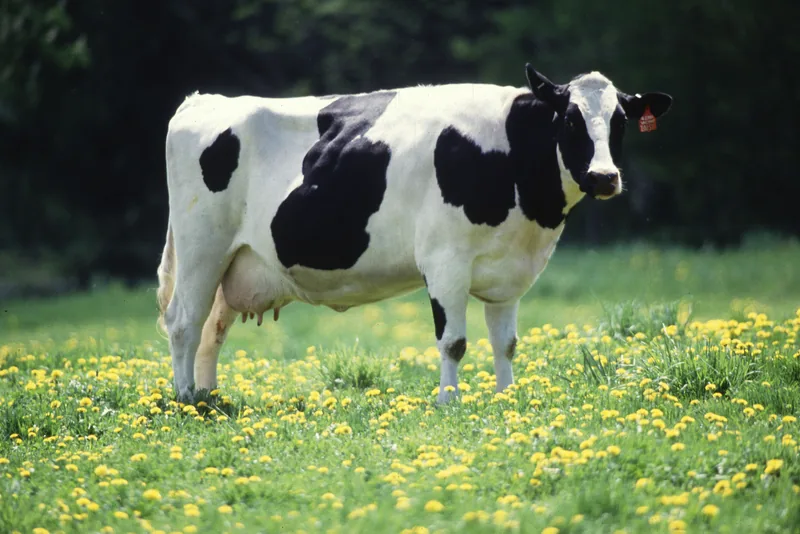
Official statistics still give a careful meaning to the dairy herd, and careful figures for England and for the United Kingdom. They do not always cover the same year, or the same part of the country. This desk keeps them unblended.
In Agriculture in the United Kingdom 2025, Chapter 2, the notes for the female cattle breeding-herd figures say: “Dairy cows are defined as female dairy cows over 2 years old with offspring.” [source]
The same notes say: “Beef cows are defined as female beef cows over 2 years old with offspring.” [source]
That official dairy-herd figure is therefore not a count of every dairy animal on a farm. A female dairy animal over two years old that has not had offspring is outside that definition, and so is a calf.
Because the official definition is “female dairy cows over 2 years old with offspring,” the dairy-herd total in that United Kingdom chapter is not a headcount of the whole dairy herd in the everyday sense. [source]
Youngstock, and dairy females that have not yet had offspring, are not included in that particular official figure. This desk does not invent a separate official total for those animals from the chapter’s rounded cattle-and-calves figure, because that wider total is not broken down into those groups on the page quoted here.
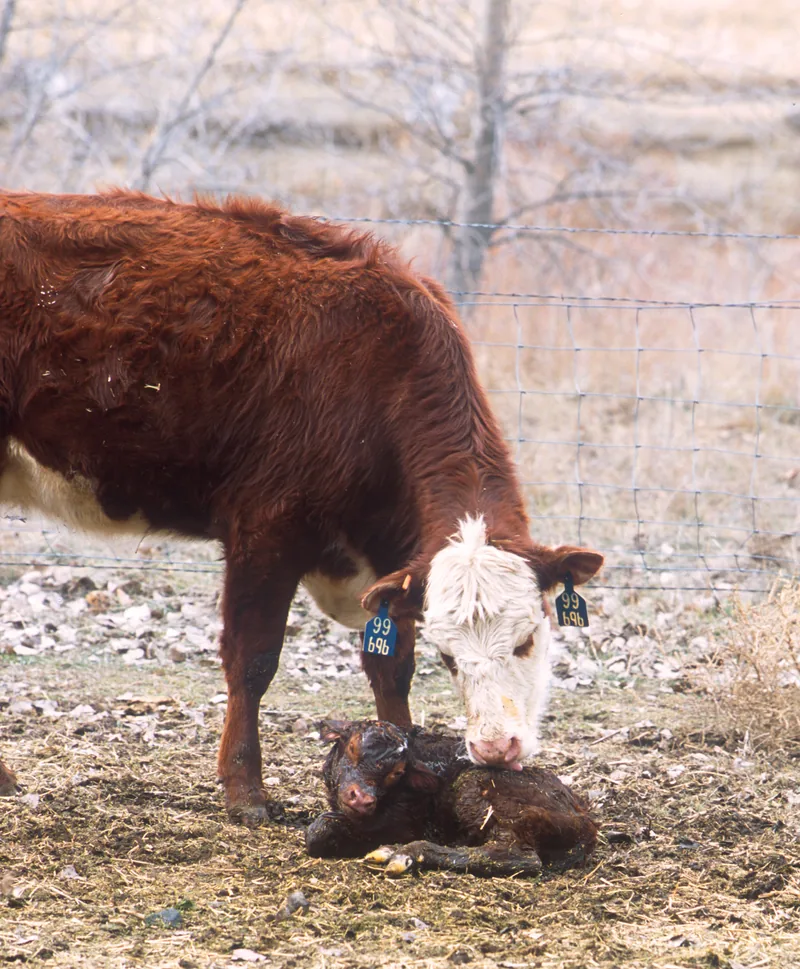
A United States Agricultural Research Service photograph on this site is captioned, by that service, as a two-year-old cow with her newborn calf. It is shown as a picture of a cow and a calf, not as a Defra record and not as a British official count.
Defra’s release Livestock populations in England at 1 June 2026 is for England, and for a later year than the 2025 United Kingdom chapter. The two must not be added, subtracted, or treated as one series. [source]
The release says: “The total number of cattle and calves in England decreased by 1.5% to 4.8 million in June 2026.” It goes on: “The breeding herd has continued its long-term downward trend, decreasing by 2.2% and stands at 1.6 million. Dairy herd numbers decreased by 2.4% to 1.1 million. The beef herd fell by 1.8% to 559 thousand.” [source]
The table published with that release gives the 2026 dairy herd as 1,056,430, the beef herd as 558,867, and the total breeding herd as 1,615,297. [source]
The England release reports a “dairy herd” figure. It does not, on the page quoted here, repeat the “over 2 years old with offspring” definition used in the United Kingdom 2025 chapter. This desk does not borrow that definition and apply it to the England table.
Agriculture in the United Kingdom 2025 is for the United Kingdom at 1 June, and for 2025, not for England in 2026. [source]
An opening summary in that chapter says the total number of cattle and calves decreased by 1.3% to 9.3 million animals, and that “the dairy herd increased by 0.7% to 1.8 million animals.” In the livestock section the chapter also says: “The dairy herd remained stable at 1.8 million animals.” [source]
Figure 2.2a, “Female cattle breeding herd (thousand head),” gives the 2025 figures as 1,849 thousand cows in the dairy herd, 1,290 thousand in the beef herd, and 3,139 thousand for the total breeding herd. For 2024 the same table gives 1,836 thousand cows in the dairy herd. [source]
The rounded official sentences and the table belong together; this desk does not pick one and discard the other, and it does not turn the table into an England figure.
The England release is clear about how its cattle figures are compiled. “Cattle results are sourced from the Cattle Tracing System (CTS). The data include returns from all holdings with cattle so are not subject to survey error.” [source]
It also says: “All figures relate to commercial holdings apart from the cattle figures which relate to all holdings as these data are sourced from the Cattle Tracing Scheme.” [source]
The United Kingdom chapter says cattle data are sourced from the Cattle Tracing System in England, Wales and Scotland, and from the equivalent Northern Ireland Food Animal Information System (NIFAIS) in Northern Ireland. [source]
Other livestock figures in the England release come from the June Survey of Agriculture and relate to commercial holdings. Those survey methods are not used here as if they were the source of the cattle totals.
This desk is not a single “how many dairy cows are there?” number for the British Isles. The official figures quoted here do not share one geography and are not for the same year.
It is not a guide to milking, breeding or animal health, and it is not a commentary on any particular farm. Photographs of herds, parlours and a calf are shown with the place and the date that can be verified, and are not treated as official counts.
It does not use an older legal wording, from a different kind of document, in which “cow” included a heifer that had calved, as if that wording were the same as the 2025 statistical definition.
Three quick checks
Each answer is taken from the official wording on this desk.
In Agriculture in the United Kingdom 2025, dairy cows are defined as…
The Defra table for livestock populations in England at 1 June 2026 gives the dairy herd as…
Cattle figures in the England release for 1 June 2026 are sourced from…
Enjoyed the dairy herd?
No pop-ups. No intrusive advertising. Just interesting stuff. A little support helps the next farmyard site get built.