farmyard.im
The word vaccination comes from a cow
In 1796 an English country doctor, Edward Jenner, took fluid from a cowpox sore on a milkmaid’s hand and placed it in a boy’s arm. He later called the method vaccination, from vacca, the Latin word for cow. A farm animal, quietly, had entered the language of medicine.
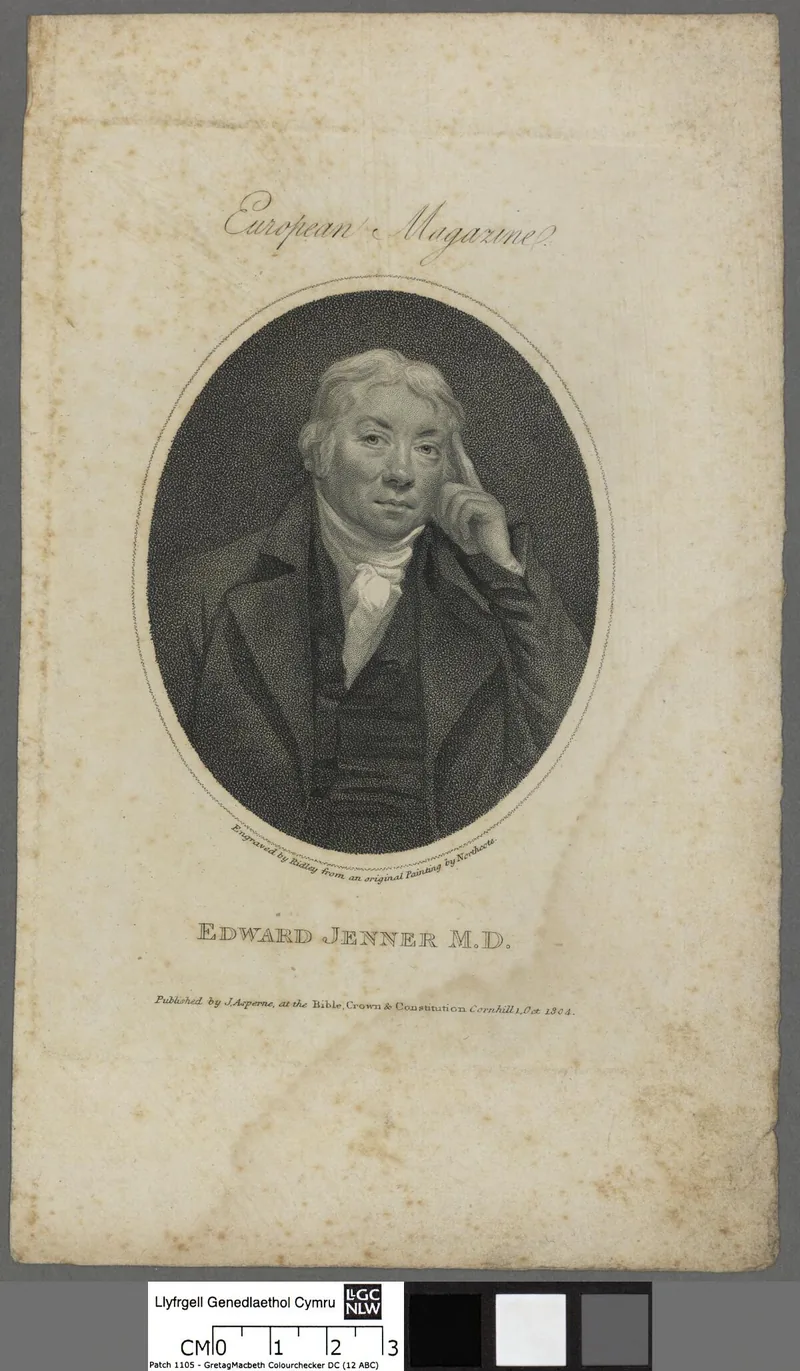
The Science Museum Group holds lancets that belonged to Jenner. The museum’s label is beautifully direct: in 1796 he “used a lancet to introduce fluid from a cowpox sore through a person’s skin, in order to inoculate them against smallpox, a similar but more dangerous disease. He called his method ‘vaccination’, from ‘vacca’, the Latin word for cow.” [source]
The museum’s biography of Jenner names the milkmaid, Sarah Nelmes, and the boy, James Phipps. Jenner knew the country folklore that milkmaids, who caught cowpox from their close work with cows, seemed not to catch smallpox. He wanted proof. Several days after the cowpox inoculation, he exposed Phipps to smallpox. “He was found to be immune.” [source]
That is the kind of story this site is for. The dairy cow is easy to take for granted: a black-and-white animal in a field, or a number in a government table. Look a little closer, and the record is much stranger. Official wording says a dairy cow, in the United Kingdom’s 2025 figures, is a female dairy cow over two years old with offspring. Three golden Guernseys sailed to Antarctica in the 1930s, and a calf named Iceberg was born just north of the Antarctic Circle. A cream separator, in a Science Museum explanation, works like the laboratory centrifuge that separates red cells from plasma. A royal dairy cooled its pans with a mermaid, a merman and a lady holding a jug.
Where to start
- Discoveries A cabinet of researched oddities: vaccination, Antarctic cows, a royal creamery, and a slogan that still sounds slightly drunk.
- Guernseys in Antarctica Admiral Byrd’s second expedition took three golden Guernseys south. The Polar Curator at Ohio State tells the story.
- What counts as a dairy cow? The signature desk: official Defra wording, kept in its own year and geography.
- England and the UK Two official totals that must not be added together.
- The story of the dairy cow From hand milking and a royal creamery to tracing systems and robots at Windsor.
- A quiz and a timeline game Ten questions from a larger pool, with sources on every answer, plus a second game.
The farmyard around the cow
Those Antarctic Guernseys have a later neighbour in the story of exploration: in January 1958, Ferguson farm tractors reached the South Pole. That is told on tractors.farmyard.im. The other animals of the same yard are on hens, pigs and sheep. The hub itself is farmyard.im.
If you like a long list, there is an 80-plus fact file, each item tied to a source. If you like an argument, there is myths versus facts. And if you want something to print, there are three free typographic fact sheets.
Keep exploring
Enjoyed the dairy?
No pop-ups. No intrusive advertising. Just interesting stuff. A little support helps the next farmyard site get built.